


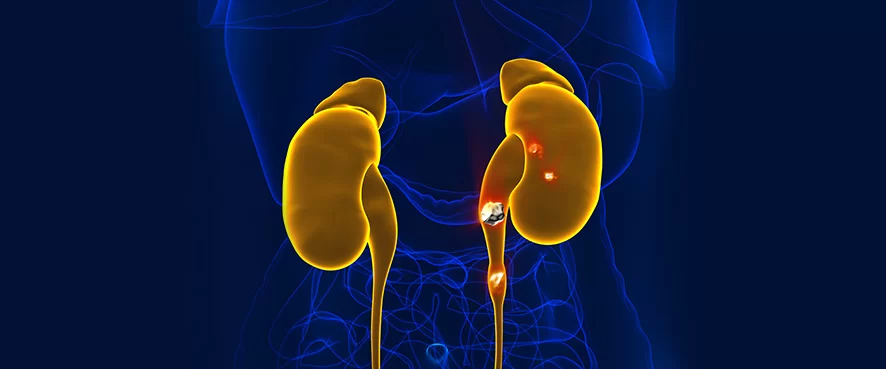
The kidneys act as a filter in the body and are responsible for removing harmful and waste materials from the body. While the kidneys carry out the purification process, some salts and minerals cannot be excreted through urine and begin to accumulate in the kidneys. Over time, these accumulated salts and minerals cause the formation of stones in the renal ducts. In the treatment of kidney stones, treatment options vary depending on the size and location of the stone.
What is kidney stone surgery?
The causes of kidney stone formation are varied: Factors such as low fluid intake, diseases such as diabetes, hypertension, and excessive salt consumption in the daily diet cause the formation of kidney stones. Kidney stones usually show symptoms when they enter the urinary tract. Therefore, the disease can be detected at a late stage. If the kidney stone is small and intervention for its removal cannot be performed, the patient is advised to drink more water than their standard daily intake and the stone is expected to pass on its own. However, in some cases, the location and size of the stone require intervention. What this intervention should be is decided by specialists in the field of urology. If the kidney stone is very large and the location of the stone poses a threat to the patient's health, surgical methods are used in the treatment of kidney stones. Today, kidney stone surgeries are performed using various techniques. Some types of kidney stone surgeries can be listed as follows:
Percutaneous nephrolithotomy is a surgical procedure for kidney stones that allows the removal of stones from the kidneys. This is a treatment method that enables the removal of even very large stones. The procedure is performed under general anesthesia. Unlike conventional surgical methods, percutaneous nephrolithotomy is a closed surgery. During the procedure, a small incision is made in the back area, and the kidney stone is broken up by reaching the kidney through this incision. After the kidney stone is fragmented, it is extracted through the same opening.
Compared to open surgery, postoperative pain is less. After a few days, the patient returns to their normal daily life. It is important to note here that patients should avoid heavy physical activity during the first few weeks after the surgery. As with any surgical procedure, some complications may be observed in rare cases after percutaneous nephrolithotomy as well. In case of high temperature, nausea, and severe pain after the procedure, it is recommended that the patient immediately visit the nearest healthcare facility.
During the ureteroscopy procedure, which is another surgical intervention for removing kidney stones, an endoscope called a ureteroscope is inserted through the urinary tract and the kidney stones are broken up using a laser. If the fragments of the broken stones are large, they are removed during this intervention. Sometimes the fragmented stones from this procedure can be small in size. In this case, the physician performing the intervention may wait for the stones to pass on their own. Ureteroscopy is a procedure performed under general anesthesia. After ureteroscopy, the patient is usually discharged within 1-2 days after the intervention.
The kidneys are irreplaceable organs for the continuity of vital functions. Disorders in kidney function can cause very serious health problems. Early diagnosis is very important for the treatment of these diseases. When necessary, do not neglect to visit a urology specialist.



 Viber
Viber
 Whatsapp
 Phone
Phone