Last updated: 16 януари 2026
In the era of rapid medical development, technological innovations used for examining internal organs and maintaining our health play a key role. Among the most important elements for examining the digestive system are endoscopic medical procedures such as gastroscopy and colonoscopy.
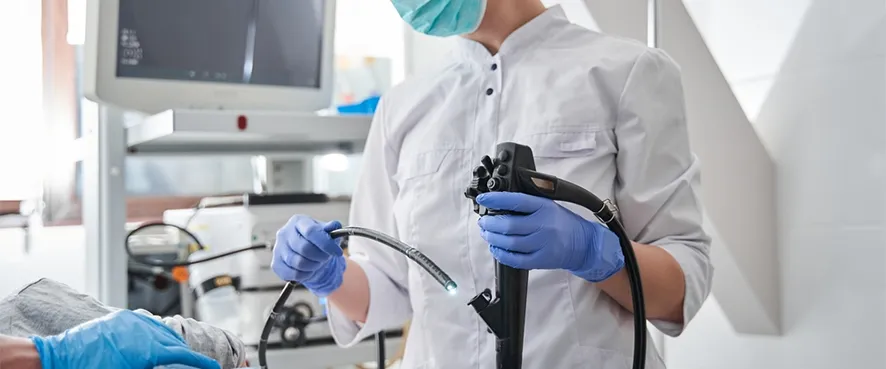
Gastroscopy is a widely used medical procedure for visualization and examination of the upper part of the digestive system. This procedure is performed using a gastroscope - a thin and flexible tube. The endoscope captures detailed images of internal organs through a camera placed at its end. These images are then displayed on a screen and analyzed by specialists.
The areas of application of endoscopy are quite diverse. It is often used for diagnosing and treating gastric ulcers, reflux disease, biliary tract diseases, digestive system problems, and some types of oncological diseases. Gastroscopy is a minimally invasive examination method performed under sedation, during which the patient does not experience any pain and can be discharged from the healthcare facility one hour after the procedure.
Colonoscopy is an indispensable method for examining the lower part of the digestive system. Colonoscopy is a type of endoscopic procedure specifically designed for diagnosing diseases of the intestinal system. During its performance, a colonoscope is used - a long and flexible tube with a small camera that is inserted into the large intestine through the rectum. The camera located at the entry part of the colonoscope allows doctors to visualize and carefully examine the intestines. During this examination, doctors can detect problems such as polyps, inflammation, bleeding, or other anomalies and perform a biopsy if necessary. Colonoscopy is particularly important for screening and early detection of colorectal cancer. Colonoscopy is a minimally invasive examination method performed under sedation, during which the patient does not experience any pain and can be discharged from the healthcare facility one hour after the procedure.
Why are gastroscopy and colonoscopy important?
- Early diagnosis: These procedures help with early diagnosis of many diseases. Early diagnosis allows diseases to be treated more effectively and can increase life expectancy.
- Treatment: In addition to diagnostics, in some cases gastroscopy and colonoscopy are also used for treatment. For example, during colonoscopy, intestinal polyps can be removed, which can prevent the development of cancer.
- Understanding symptoms: These procedures can help determine the cause of undiagnosed symptoms such as stomach pain, bleeding, and weight loss.
- Minimal invasiveness: Gastroscopy and colonoscopy are endoscopic procedures with much less invasiveness compared to laparotomy (an open surgical procedure performed to examine abdominal organs). This means much less pain, faster recovery, and fewer complications for patients.
- Cancer screening: Colonoscopy is considered the gold standard for colorectal cancer screening, allowing detection and treatment of the oncological disease at an early stage.
Areas of application of gastroscopy:
- Stomach and esophageal diseases: Gastroscopy is used for diagnosing and monitoring stomach and esophageal diseases such as gastric ulcer, gastritis (stomach inflammation), gastric bleeding, esophageal inflammation, reflux disease, and esophageal cancer.
- Biliary tract and pancreatic diseases: Endoscopy is used for diagnosing problems such as gallstones, biliary tract obstruction, pancreatitis (inflammation of the pancreas), and biliary tract cancer. Endoscopic procedures can also be performed for removing stones and obstructions in the biliary tract.
- Gastric cancer screening: Gastroscopy can also be used for gastric cancer screening. Especially in people with suspected risk factors, cancer can be detected at an early stage by examining the gastric mucosa.
Areas of application of colonoscopy:
- Colorectal cancer screening: Colonoscopy is the gold standard for colorectal cancer screening. It is a routine procedure recommended once a year for patients with family history and individuals with increased risk of colorectal cancer. Through this method, by examining the intestinal mucosa, polyps (precancerous formations) can be detected and removed when necessary.
- Intestinal problems: Colonoscopy is used for diagnosing and treating intestinal problems. It is important for diagnosing diseases such as irritable bowel syndrome (IBS) and inflammatory bowel diseases (for example, Crohn's disease and ulcerative colitis).
- Intestinal hemorrhage: Colonoscopy is frequently used for detecting and treating the cause of intestinal hemorrhage. It can diagnose conditions requiring surgical intervention by identifying the source of bleeding.
- Intestinal polyps and tumors: Colonoscopy is used for early diagnosis and removal of intestinal polyps, and also aids in the diagnosis of intestinal tumors.
- Monitoring of inflammatory bowel diseases: Colonoscopy is used for monitoring inflammatory bowel diseases such as ulcerative colitis or Crohn's disease and for evaluating the response to treatment.
Gastroscopy and Colonoscopy are an integral part of modern medicine and play an important role in maintaining health. These examination methods are of decisive importance for early diagnosis and treatment of various diseases. It is extremely important to follow regular medical check-ups and follow your doctor's recommendations to maintain your health and timely detect potential health problems. If you need a gastroscopy or colonoscopy procedure, your doctor will provide you with more information about these procedures. Remember that one of the most important steps for maintaining good health is early detection, and gastroscopy and colonoscopy are powerful tools for this purpose.