


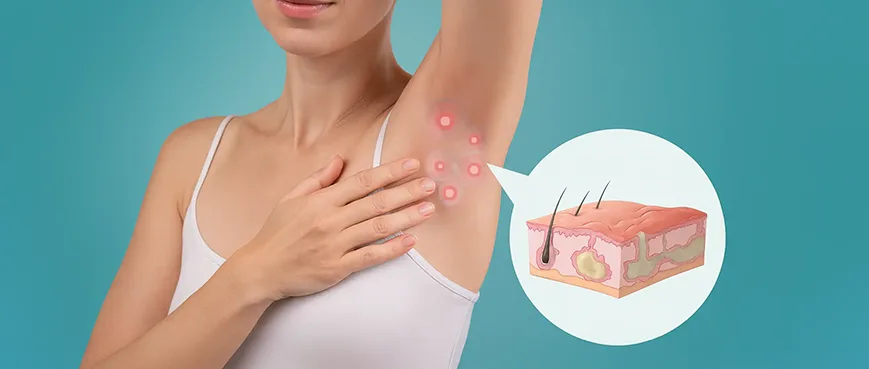
Hidradenitis suppurativa, also known as Acne Inversa, is a chronic inflammatory skin disease that affects hair follicles, most often in areas with apocrine sweat glands. The disease is characterized by the formation of painful subcutaneous lumps, which can develop into abscesses, open with discharge of pus with an unpleasant odor, and lead to chronic recurrences, fistulas (tunnels under the skin), and scars.
This is a disease that has a significant impact on quality of life - both physically and emotionally - and often remains underestimated and diagnosed late.
Hidradenitis suppurativa most commonly affects areas with skin friction and the presence of sweat glands:
Hidradenitis suppurativa usually begins after puberty and can progress for years, worsening over time. Women are three times more likely to develop the disease compared to men. Genetic predisposition is also significant - in some ethnic groups, the risk of developing the disease is higher.
When to seek medical help?
Be sure to seek medical help if you experience any of the symptoms listed below. In such cases, the patient should consult a dermatologist or surgeon, as this is a skin disease. Assessment by a surgeon is necessary to determine the treatment plan.
Causes and predisposing factors for Hidradenitis Suppurativa
The exact cause is not fully understood, but the disease is associated with blockage of hair follicles, inflammation, and bacterial infection. Main risk factors include:
Diagnosis
Diagnosis is clinical, based on characteristic symptoms and the recurrent course. Imaging studies (e.g., soft tissue ultrasound) and microbiology (in the presence of abscesses) can be helpful in some cases. Biopsy is not mandatory unless another disease is suspected.
Treatment of hidradenitis suppurativa
Therapy depends on the severity of the disease and the frequency of recurrences:
After being diagnosed with Hidradenitis Suppurativa, many patients face the question: is surgical treatment necessary and when should it be applied?
Surgery can be applied at all stages of the disease, depending on the severity and extent of the lesions. In many cases, medication treatment is started first to control inflammatory activity, after which surgical intervention is undertaken to achieve long-term remission. Sometimes, however, especially with limited, single lesions, surgery can be performed at early stages - with the aim of their complete removal and prevention of recurrences.
It is important to emphasize that when there are indications for surgical treatment, it should not be delayed, as delay can lead to expansion of the inflammatory process, formation of fistulas, and permanent skin damage.
Main surgical approaches:
Lifestyle advice and recommendations
Although there is no guaranteed method for preventing the disease, the following measures can reduce the risk of flare-ups:
Hidradenitis suppurativa is a chronic and socially significant disease that significantly worsens quality of life. Timely diagnosis and proper treatment can limit complications and improve the patient's condition. If you suspect you have hidradenitis suppurativa or experience symptoms, it is important to consult a medical specialist for an accurate diagnosis and appropriate treatment.
The information is provided for educational purposes and does not replace consultation with a medical specialist. If you suspect a disease, always consult a qualified healthcare professional for any medical problems or before making any decisions related to your health.



 Viber
Viber
 Whatsapp
 Phone
Phone