

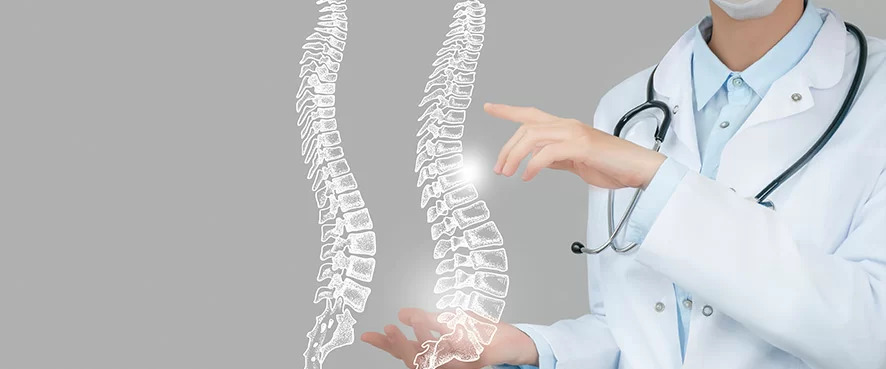
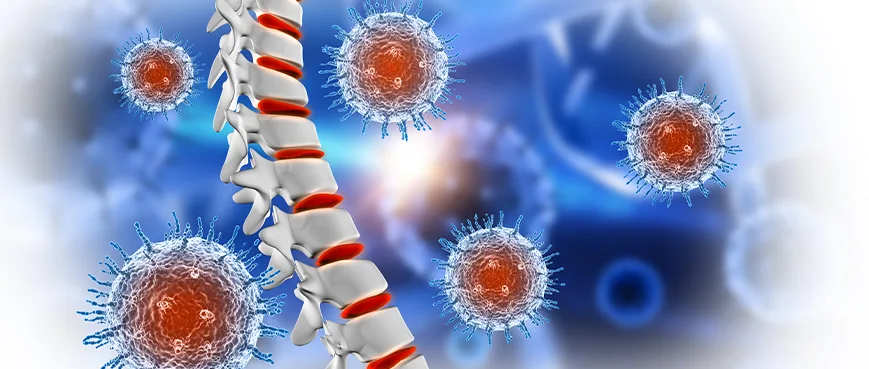
The spinal canal is a bony structure consisting of 33 vertebrae, descending from the skull to the back and surrounding the spinal cord. The different sections of the spinal column consist of different numbers of vertebrae: cervical - 7 vertebrae, thoracic - 12 vertebrae, lumbar - 5 vertebrae, sacral - 5 vertebrae, and coccygeal - usually 4 vertebrae.
The spinal cord is a long, tubular organ of nervous tissue located within the spinal canal. It is composed of nervous tissue and supporting cells, extending from the medulla oblongata of the brainstem to the lumbar region of the spinal column. The spinal cord is a vital structure whose function is to transmit nerve signals between the brain and the body.
Spinal canal narrowing is the narrowing of the space at one or more locations along the spinal canal. The narrowed canal can lead to compression of the neural structures (spinal cord and nerve roots) that pass through the spinal column. Narrowing of the spinal canal is most commonly found in the lower back and neck regions. Some patients with spinal stenosis may have no complaints at all, while another group of patients may present symptoms such as pain, numbness, decreased sensitivity, and muscle weakness. These symptoms can intensify and worsen over time. If the patient has similar symptoms and if they progress over time, timely medical assistance should be sought.
The most common cause of spinal stenosis is osteoarthritis (also known as joint calcification), which causes wear and weakening of the spinal column. Other factors may include the presence of disc herniation, spinal fractures and injuries, cysts or tumors of the spinal cord, and scoliosis. In severe cases of stenosis, surgical treatment may be necessary to decompress the compressed spinal cord. As a result of untreated cases of stenosis, permanent stiffness, weakness, balance problems, urinary incontinence, or paralysis may develop.
The two main types of spinal stenosis are:
Lumbar stenosis can cause pain in the lower back and legs, as well as stiffness, numbness, and weakness with difficulty walking. Disturbances in bowel and bladder function may also occur.
Treatment of spinal stenosis varies depending on the severity of symptoms and the exact location of the stenotic area. In severe cases of spinal stenosis, surgical intervention is inevitable, but in mild cases, medication treatment, monitoring, and observation may be applied.
In the initial stages of the disease, patients with this diagnosis are prescribed medication treatment containing pain-relieving drugs and are assigned a course of physical therapy and rehabilitation. Patients diagnosed with spinal stenosis are usually less active due to the presence of pain syndrome. This leads to weakening of the musculature. The goal of physical therapy and rehabilitation is to maintain muscle tone and endurance, maintain spinal flexibility, and improve body balance. If there is no improvement in the patient's condition after applying this course of treatment, surgical treatment options are considered.
This method aims to perform decompression in the corresponding area of spinal column narrowing without placing foreign bodies (implants) in the patient's body. With this method, the narrowed canal is expanded from the inside out. This is one of the most modern methods for treating spinal stenosis and has numerous advantages compared to other older surgical techniques that are no longer preferred. Some of these advantages are:
For the reasons mentioned above, implant-free treatment of spinal stenosis using the microsurgical method is also preferred for elderly patients with concomitant diseases.
For more detailed information and a free second opinion from our Neurosurgery specialists, do not hesitate to contact us!
 Viber
Viber
 Whatsapp
 Phone
Phone