


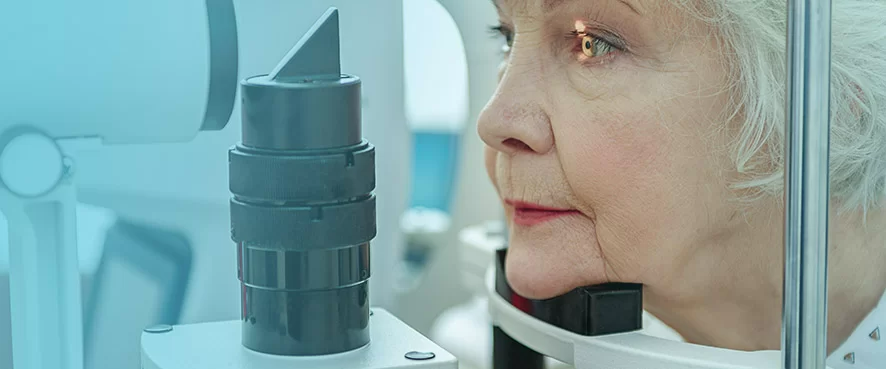
What is an eye cataract?
An eye cataract is a common eye disease in which the natural lens of the eye gradually loses its transparency. This leads to impaired passage of light to the retina and gradual blurring of vision. Most often, cataracts develop with advancing age, but they can also be observed in younger people.
How does a cataract begin?
Directly behind the pupil is the natural lens of the eye, which plays a key role in focusing images at both far and near distances. Over time, the structure of this lens can change and it can begin to lose its transparency.
In the early stages, cataracts usually do not affect the entire lens, so vision may be only slightly impaired. Initially, patients notice fading of colors and reduced quality of vision, which gradually deepens.
How does an eye with a cataract see?
With a cataract, vision is often described as looking through foggy or frosted glass. As the condition progresses, visual acuity decreases significantly, which can make daily activities such as reading, driving, and working in low light difficult.
Cataracts can be detected with a routine eye examination. However, for proper treatment planning, a detailed ophthalmological examination is necessary, including evaluation of the cornea, the condition and density of the lens, pupil width, and retinal health.
Symptoms of cataracts
The most common complaints include:
Can cataracts be prevented?
Cataracts cannot be completely prevented, but some measures can reduce the risk of their earlier development:
At what age do cataracts appear?
Most commonly, cataracts are observed in people aged between 50 and 60 years. However, they can develop earlier, including in childhood. Increased risk exists in patients with diabetes, after eye injuries, with prolonged use of corticosteroids, or after other eye diseases.
How are cataracts treated?
Cataracts cannot be treated with medications or glasses. The only effective treatment method is surgical intervention. Surgery is recommended when the reduced vision begins to interfere with the patient's daily life.
During the surgery, the clouded lens is removed and replaced with an artificial intraocular lens that takes over the function of the natural lens.
How does cataract surgery proceed?
Cataract surgery usually lasts about 15-20 minutes and in most cases is performed on an outpatient basis. The patient can be discharged the same day. When cataracts are present in both eyes, surgeries are performed in stages, at an interval determined by the treating physician.
The most commonly used method is phacoemulsification (phaco), in which the lens is removed using ultrasound technology. There is also femtosecond laser cataract surgery, in which some of the stages are performed with a computer-controlled laser with high precision.
Types of intraocular lenses
The choice of intraocular lens is key to the final visual outcome. Depending on the patient's needs, the following may be used:
In suitable patients, special lenses can reduce or eliminate the need for glasses for both far and near distances.
What is important to keep in mind?
The success of the surgery depends on:
The implanted lenses are biocompatible, do not cause rejection, and remain in the eye for life.
Is cataract surgery safe?
Like any surgical intervention, cataract surgery carries certain risks. Thanks to modern methods and timely intervention, the success rate is very high, and the risk of complications is minimal.
Cataract surgery prices
For personalized information regarding cataract surgery prices, please contact us at the phone number listed or use the form below. Our international patient team will contact you at a time convenient for you to provide detailed and individually tailored information.
Frequently asked questions
Will my vision improve after cataract surgery?
When there are no other eye diseases besides cataracts, vision usually improves significantly after surgical treatment.
Will glasses be needed after surgery?
The need for glasses depends on the type of intraocular lens implanted. With some lenses, distance or near vision may be clear without glasses, while with others, correction may be necessary. There are also special lenses that can correct vision at different distances and astigmatism in one procedure.
Does vision need to be severely impaired for surgery to be performed?
No. Surgery can be performed at any stage of the cataract when it begins to affect the quality of vision and daily comfort.
Is surgery riskier with advanced cataracts?
With very advanced cataracts, surgery can be more complex and require more time. Therefore, timely medical assessment is essential.
What type of anesthesia is used during surgery?
In adult patients, the surgery is usually performed under local anesthesia. General anesthesia is used in rare cases, most often in children.
Is laser correction possible after cataract surgery?
In certain patients and after medical evaluation, the possibility of additional laser correction may be discussed.
Information note
This text is for informational purposes and does not replace consultation with a specialist.




 Viber
Viber
 Whatsapp
 Phone
Phone